

What Does the Bible Say About Pornography is a question many Christians ask when looking for guidance about sexual purity, temptation, and living according to biblical values. The Bible does not mention modern pornography by name, but it does speak clearly about lust, sexual immorality, purity of heart, self-control, and honoring God with our bodies and thoughts.
Understanding what the Bible says about pornography can help believers think more carefully about how they use their minds, eyes, and bodies. Scripture encourages Christians to turn away from lustful behavior, seek God’s strength, renew their minds, and pursue a life centered on purity, faith, and God’s grace.
Does the Bible Mention Pornography Directly?
No — and that’s worth saying plainly upfront. The Bible was written thousands of years before cameras, film, or the internet existed, so the word “pornography” never appears in its pages, in any translation, in any book.
That said, silence on the specific word is not silence on the subject. Scripture speaks extensively about the underlying realities pornography involves: lust, sexual immorality, the condition of the heart, and the purpose of the body. The principles are there in detail, even though the modern term isn’t.
What Does the Bible Say About Pornography

What Does the Bible Say About Pornography ultimately comes down to the Bible’s broader teachings about lust, purity, self-control, and honoring God with our bodies and minds. Although pornography itself is not specifically named in Scripture, the principles taught by Jesus and the biblical writers give Christians a framework for thinking seriously about sexual content and its effect on the heart.
For someone who is struggling with pornography, the biblical message is not simply about condemnation but also about hope, forgiveness, and transformation.
Where the Word “Pornography” Actually Comes From
Here’s a detail most articles on this topic skip entirely, and it’s genuinely useful context. The English word “pornography” is built from two Greek words that appear throughout the New Testament: porneia and graphé.
- Porneia refers broadly to sexual immorality — any sexual activity outside of God’s design for marriage.
- Graphé means “writings.”
- Put together, the word originally referred to erotic writing, long before photography or video existed. As visual media evolved, the meaning shifted to include images and film, but the Greek root — sexual immorality — never changed.
This matters because it shows that pornography isn’t a modern loophole Scripture failed to anticipate. The New Testament’s repeated warnings against porneia are, linguistically speaking, warnings against exactly this.
Is Watching Pornography a Sin According to the Bible?
This is the single most common question people ask on this topic, so it deserves a direct answer: yes, according to the consistent teaching of Scripture, watching pornography is a sin.
That conclusion doesn’t rest on one isolated verse — it’s built from several converging lines of biblical teaching:
- Jesus taught that lust itself, not just physical action, is already a violation of God’s standard (Matthew 5:28).
- Scripture repeatedly names porneia — sexual immorality — as something that shouldn’t even be discussed casually among believers, let alone consumed (Ephesians 5:3).
- The body is described as belonging to God, not to be used however a person wishes (1 Corinthians 6:18-20).
- Uncontrolled sexual desire is listed among the “works of the flesh” that stand opposed to a Spirit-led life (Galatians 5:19-21).
None of these passages were written with a screen in mind, but together they describe pornography’s essential nature with remarkable precision.
Lust Is the Heart of the Problem

The most direct statement Jesus ever made about sexual sin had nothing to do with physical action at all. In Matthew 5:28, He said that anyone who looks at a woman with lustful intent has already committed adultery with her in his heart.
That single statement quietly dismantles a very common argument — that watching pornography is harmless because “nothing physical is happening.” Jesus wasn’t focused on the act; He was focused on the internal condition driving it. Lust isn’t simply a feeling that passes through unnoticed. Feeding it intentionally, repeatedly, through pornography is a way of cultivating it and giving it a permanent seat in the mind.
Pornography, in that sense, functions as a delivery system for exactly the internal condition Jesus identified as sin. The two can’t be neatly separated.
Bible Verses About Sexual Immorality and Lust
The verses below are grouped by theme, since the Bible approaches this subject from several different angles at once.
Direct Verses About Sexual Immorality (Porneia)
- Ephesians 5:3 — Sexual immorality and impurity shouldn’t even be spoken of among believers.
- 1 Corinthians 6:13 — The body was not made for sexual immorality, but for the Lord.
- Galatians 5:19-21 — Sexual immorality is listed among the works of the flesh, opposed to God’s Kingdom.
- Colossians 3:5 — Believers are told to put to death whatever in them belongs to sexual immorality and impure desire.
Verses About Lust and the Condition of the Heart
- Matthew 5:28 — Looking at someone with lustful intent is described as adultery already committed in the heart.
- Job 31:1 — Job describes making a covenant with his own eyes not to look with desire.
- Proverbs 6:25 — A warning not to let desire be captivated by beauty.
- James 1:14 — Temptation happens when a person is drawn away and enticed by their own desire.
- 1 John 2:16 — Sin is categorized into the lust of the flesh, the lust of the eyes, and the pride of life — a framework that fits pornography almost exactly.
Verses About the Body as Sacred
- 1 Corinthians 6:18-20 — Believers are told to flee sexual immorality; the body is described as a temple of the Holy Spirit, bought at a price.
- Exodus 20:14 — The command against adultery, foundational to God’s design for marriage and sexual faithfulness.
- Hebrews 13:4 — The marriage bed is described as honorable and undefiled.
Your Body Is Not Your Own
One of the clearest passages addressing sexual behavior is 1 Corinthians 6:18-20. Paul writes that believers should flee sexual immorality, that the body is the temple of the Holy Spirit, and that believers were bought at a price — therefore called to honor God with their bodies.
Three details in that passage stand out:
- The instruction is to flee, not manage. There’s no suggestion that careful moderation is the biblical strategy here. The instruction is escape, not negotiation.
- The body is called a temple. A temple is sacred space set apart for God’s presence. Pornography introduces something into that space that was never meant to be there.
- “Bought with a price” changes ownership. A believer’s body, according to this passage, was redeemed at enormous cost — which means how it’s stewarded becomes an act of worship or an act of dishonor, with no real middle ground.
Science, interestingly, tends to agree with this framing from an entirely different angle: research on the brain’s reward pathways shows that pornography activates the same pleasure chemistry as real intimacy, but without the relational context that makes that chemistry meaningful — producing side effects rather than the connection it imitates.
What You Feed Your Eyes Feeds Your Heart

Psalm 101:3 records a personal declaration: “I will set no wicked thing before my eyes.” That’s the statement of someone who understood the direct link between what enters through the eyes and what eventually takes root in the heart.
Jesus made a related point in Matthew 6:22-23, describing the eye as “the lamp of the body” — if the eye is healthy, the whole body is full of light; if not, the whole body is full of darkness.
Pornography is engineered to be visually stimulating in the most extreme way possible, built specifically to capture attention and trigger repeated engagement. Every viewing feeds the heart a steady diet of images and distorted expectations about people, sex, and relationships. Over time, that diet reshapes what feels normal, what feels attractive, and how other human beings are perceived. Proverbs 4:23’s instruction to guard the heart above everything else isn’t just spiritual language — it’s remarkably practical advice about exactly this pathway.
Pornography and the Dignity of the Person on the Screen
Genesis 1:27 states that every human being is made in the image of God — one of the most far-reaching claims in all of Scripture. It means every person, without exception, carries inherent dignity.
Pornography takes people made in that image and reduces them to objects of consumption. It strips away personhood and story, replacing it with a body performing for someone else’s use. That’s a direct contradiction of what Scripture says every human being actually is.
- Viewing pornography isn’t a passive act — it financially and digitally supports an industry that documented research consistently links to exploitation, coercion, and trafficking.
- Many people appearing in this content carry hidden trauma or addiction that a viewer never sees.
- Scripture’s repeated call to love one’s neighbor is difficult to reconcile with participating in an industry built on routinely violating that same command.
Sexual Intimacy Was Designed for Marriage
The Bible’s vision for sex isn’t restrictive — it’s actually remarkably high. An entire book, Song of Solomon, celebrates physical intimacy between a husband and wife, and Hebrews 13:4 calls the marriage bed honorable and undefiled. God isn’t opposed to sex; He designed it.
But Scripture is consistent that intimacy was designed to flourish within a specific context — a covenantal marriage between husband and wife. Pornography doesn’t just exist outside that context; it actively works against it. Research and countless personal accounts describe the same pattern: pornography damages real intimacy, creates unrealistic expectations, reduces attraction to a real partner, and introduces comparison and dissatisfaction into relationships that were meant to be built on connection rather than fantasy.
The Mind Is a Battlefield
Romans 12:2 instructs believers not to be conformed to the pattern of the world, but transformed by the renewing of the mind. The mind isn’t a passive spectator in a person’s spiritual life — it’s the primary place where the real battle happens.
Pornography targets the mind with precision, planting images and scenarios that replay without invitation and gradually reshaping what the brain finds stimulating. 2 Corinthians 10:5 calls believers to take every thought captive to the obedience of Christ — an active, ongoing discipline rather than a passive hope. Pornography and that kind of mental discipline are difficult to sustain side by side; over time, one tends to crowd out the other.
Pornography and Masturbation: A Related Struggle
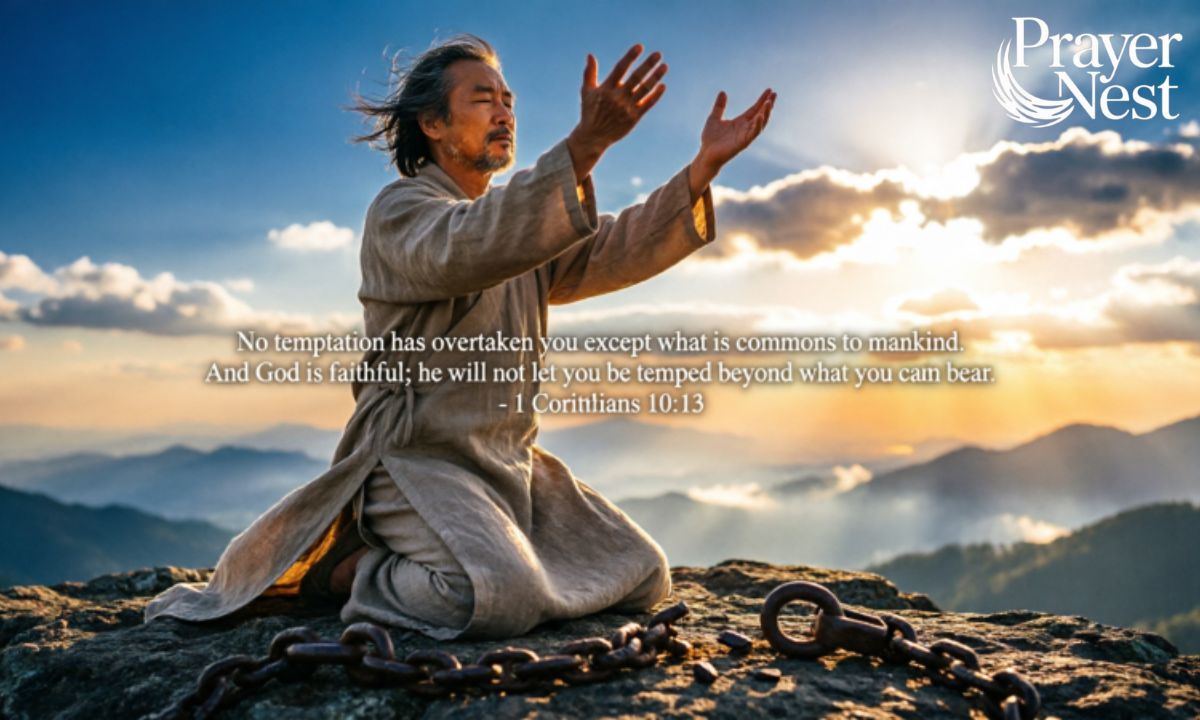
These two struggles are closely linked, and most people searching for one eventually ask about the other. The Bible doesn’t name masturbation directly any more than it names pornography, but the same underlying principles apply just as directly:
- The concern Scripture raises isn’t a specific physical act in isolation, but the lustful thoughts, fantasy, and objectification that typically accompany it (Matthew 5:28).
- Being “mastered” by any compulsive behavior — sexual or otherwise — runs against the call to self-control described throughout the New Testament (1 Corinthians 6:12; 2 Peter 2:19).
- Both struggles are best addressed together, since they usually reinforce each other; most biblical counselors treat pornography and compulsive behavior as two expressions of the same underlying heart issue rather than separate problems.
Why Pornography Damages a Person’s Relationship With God
Scripture describes a genuine cost to this behavior that goes beyond guilt in the moment. 1 John 2:17 reminds believers that the world and its desires are passing away, while a life devoted to God endures. 2 Peter 2:19 adds a sobering warning: whatever overcomes a person, that person becomes enslaved to.
Pornography has a well-documented capacity to consume a person’s attention until it becomes nearly all they think about — and the more space it occupies, the further it tends to pull someone from a sense of closeness with God. This isn’t presented in Scripture as an arbitrary rule; it’s presented as a natural consequence of where sustained attention and desire are directed.
Why Pornography Thrives in Darkness — and Loses Power in the Light
Secrecy is part of what gives this struggle its grip. Psalm 32:3-5 records David’s own experience of hiding sin: his body “wasted away” under the weight of unspoken guilt, until he finally brought it into the open and found forgiveness.
- Proverbs 28:13 teaches that concealing wrongdoing blocks a person from prospering, while confessing and turning from it opens the door to mercy.
- Romans 14:12 reminds believers that everyone will eventually give an account of themselves before God — nothing stays hidden indefinitely.
- 1 John 1:9 promises that honest confession is met with faithful, complete forgiveness.
The pattern Scripture describes is consistent: what thrives in secrecy loses its power the moment it’s brought honestly into the light, whether that’s through prayer, confession, or trusted accountability.
Christian Pornography Use: What the Statistics Show
Pornography isn’t a struggle limited to people outside the church — data suggests it’s a significant and often unspoken issue among believers as well.
| Group | Reported Pornography Use |
| Christian males, ages 13-24 | Around 41% |
| Christian males, 25 and older | Around 23% |
| Christian females, ages 13-24 | Around 13% |
| Christian females, 25 and older | Around 5% |
| Youth pastors reporting a current struggle | Around 21% |
| Pastors reporting a current struggle | Around 14% |
Other research places the number even higher across a lifetime — with some studies suggesting roughly two-thirds of Christian men and around a third of Christian women have struggled with pornography at some point. These numbers matter because they push back against the idea that this is a rare or shameful outlier issue; it’s a widespread struggle that Scripture speaks to with both honesty and hope.
There Is No Condemnation for Those in Christ
If reading through all of the above stirs up guilt or shame, it’s important to hold it alongside one of the most important truths in the New Testament. Romans 8:1 states plainly that there is no condemnation for those who are in Christ Jesus.
God isn’t holding a scorecard, waiting for a person to clean themselves up before He’ll engage with them. Where sin increased, Scripture says grace increased even more. The invitation isn’t to achieve perfection before approaching God — it’s to approach God so He can work that transformation from the inside.
- Conviction says: this behavior is wrong, and it can change.
- Shame says: something is wrong with you, and it can’t.
Conviction moves a person toward God. Shame tends to drive them away. The path forward from pornography was never meant to be self-punishment — it’s honest confession, genuine repentance, practical accountability, and a daily decision to walk in the freedom Christ has already secured.
How to Stop Watching Pornography: Biblical Steps to Freedom
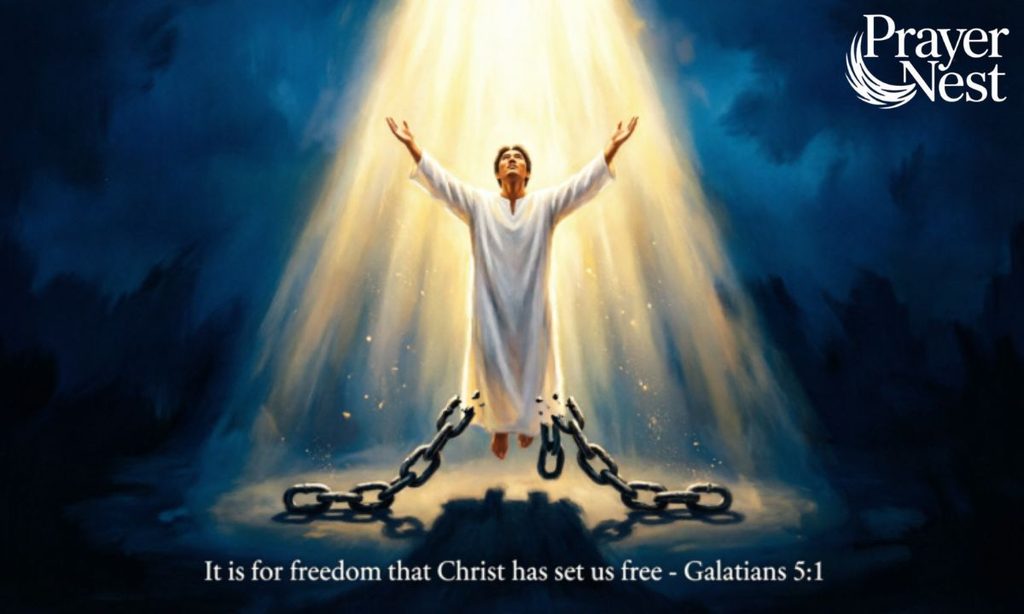
Scripture doesn’t just diagnose the problem — it offers a concrete, practical path forward. These steps combine biblical instruction with the kind of real-world action most people find necessary alongside it.
- Confess honestly to God. “If we confess our sins, he is faithful and just to forgive us” (1 John 1:9).
- Ask God to renew your mind. Don’t be conformed to worldly patterns; be transformed by a renewed mind (Romans 12:2).
- Fill your mind deliberately. Focus on whatever is true, honorable, pure, and lovely — and choose media accordingly (Philippians 4:8).
- Identify the deeper void. Ask God to reveal what emotional need is really being sought, and look to Him to meet it (Psalm 16:11; Psalm 37:4).
- Pursue holiness in practical terms. Learn to control your own body in a way that honors God (1 Thessalonians 4:3-4).
- Reserve sexual intimacy for marriage. Understand sex’s proper design and rely on a spouse alone to meet that need (1 Corinthians 7:1-5).
- Walk according to the Spirit. A Spirit-led life naturally starves the desires of the flesh rather than fighting them directly (Galatians 5:16).
- Take concrete, practical steps. Install accountability software or content blockers, limit unsupervised screen time, and find another believer who will pray with you and hold you accountable.
- Remember God’s faithfulness under temptation. No temptation is beyond what’s common to everyone, and God always provides a way through it (1 Corinthians 10:13).
What the Bible Calls You Toward Instead
Scripture never simply tells a person what to stop doing — it consistently points toward something better in its place. In place of sexual immorality, the Bible calls believers toward purity, and purity isn’t just the absence of sin; it’s the presence of wholeness.
- Philippians 4:8 offers a clear picture of a renewed mind: whatever is true, honorable, just, pure, lovely, and commendable.
- Genuine intimacy — built on honesty and commitment rather than fantasy and consumption — is held up as the real goal, not a consolation prize.
- Community with other believers who can walk through hard seasons together is repeatedly emphasized as part of lasting freedom.
- A relationship with God so real and satisfying that pornography’s hollow substitute gradually loses its pull is the picture Scripture ultimately paints.
That’s the life the Bible points toward — not gritted-teeth resistance, but a life so full of what’s real and good that there’s simply less room left for what’s false.
Key Terms Defined
Because this topic covers a cluster of related behaviors, it helps to define each one clearly.
| Term | Definition |
| Pornography | Erotic videos, images, or writing designed to produce sexual excitement |
| Cybersex | Sex-oriented messages or conversations online for the purpose of sexual excitement |
| Phone sex | Using a phone for explicit sexual conversation or to listen to erotic messages |
| Sexting | Sending sexually explicit images or messages by phone |
| Porneia (Greek) | The New Testament term for sexual immorality broadly, the root of the word “pornography” |
Frequently Asked Questions
Does the Bible directly mention pornography?
No. The word doesn’t appear in Scripture, since it was written long before photography or video existed — but the principles behind lust, sexual immorality, and guarding the heart are addressed extensively.
Is watching pornography a sin?
Yes, according to the consistent teaching of Scripture. Jesus’s teaching on lust (Matthew 5:28), along with passages on sexual immorality and the body belonging to God, point clearly to this conclusion.
Where does the word “pornography” come from?
It comes from two Greek words used in the New Testament — porneia (sexual immorality) and graphé (writings) — originally referring to erotic writing before the meaning expanded to include images and video.
Which Bible verses talk about lust and purity?
Key verses include Matthew 5:28, 1 Thessalonians 4:3-5, Job 31:1, Proverbs 6:25, and Philippians 4:8.
Why is pornography considered sinful in Christianity?
Because it encourages lustful thoughts that go against God’s design for purity, treats another person made in God’s image as an object, and works against the exclusive intimacy God designed for marriage.
How does the Bible encourage believers to overcome lust?
Through confession, prayer, a renewed mind, deliberate focus on what is pure, and practical accountability with other believers.
Can God forgive someone struggling with pornography?
Yes. Scripture teaches that sincere confession and repentance are met with complete forgiveness (1 John 1:9), and there is no condemnation for those in Christ (Romans 8:1).
Is pornography connected to masturbation in the Bible?
The Bible doesn’t name either directly, but the same principles regarding lust, self-control, and objectification apply to both, and they’re often addressed together in Christian counseling.
How common is pornography use among Christians?
Studies suggest it’s widespread — with some research showing that roughly two-thirds of Christian men and about a third of Christian women have struggled with it at some point.
What practical steps help someone quit pornography?
Confession, prayer, renewing the mind, installing accountability software or content blockers, and building an honest relationship with another believer for support are commonly recommended steps.
Conclusion
The Bible never uses the word “pornography,” but it speaks to everything underneath it — lust, the condition of the heart, the sacredness of the body, and the design of intimacy within marriage. Scripture treats this as a real and serious struggle, not a minor issue, while consistently offering something more valuable than judgment: an honest path toward forgiveness and freedom.
If this is a struggle you recognize in your own life, the biblical response was never meant to be shame or self-punishment. It’s confession, renewal, practical accountability, and a relationship with God that gradually makes the counterfeit lose its appeal. That process takes time, but Scripture is unambiguous that freedom is genuinely possible.

“Denzel is a faith-driven writer with 4 years of experience in Bible study and sharing blessings. At PrayerNests.com, he creates inspiring prayer content to uplift believers and encourage a deeper connection with God’s Word.”
1 thought on “What Does the Bible Say About Pornography? Scriptures on Lust, Purity & Freedom ”