

Self-control is an important part of Christian living because it helps us make wise choices instead of allowing emotions, desires, anger, or temptations to control our actions. The Bible contains many encouraging Bible verses about self-control that remind believers to stay disciplined, patient, watchful, and dependent on God. Self-control does not mean relying only on personal strength; it also involves allowing God to shape our thoughts, attitudes, and behavior.
Whether you are trying to control your words, manage anger, resist temptation, or develop better habits, Scripture can provide guidance and encouragement. Bible verses about self-control can remind you that growth takes patience and daily practice. Through prayer, faith, wisdom, and the help of the Holy Spirit, you can learn to respond to difficult situations with greater discipline and peace.
What Does the Bible Mean by Self-Control?

In Scripture, self-control means the God-given ability to govern your thoughts, desires, and actions so you live in obedience to Him rather than being led by whatever you feel in the moment. It’s less about gritting your teeth and more about a heart that’s genuinely being changed.
- Self-control is described as a fruit the Holy Spirit produces, not something manufactured through pure willpower alone.
- The King James Version often translates the same concept as “temperance,” a word that captures the same idea of a governed, steady life.
- It grows out of a relationship with God, which means it’s renewed daily through faith rather than run dry like willpower does.
- Far from being restrictive, Scripture presents self-control as real freedom — the power to do what’s right instead of being enslaved to whatever you crave.
Self-Control as a Fruit of the Spirit
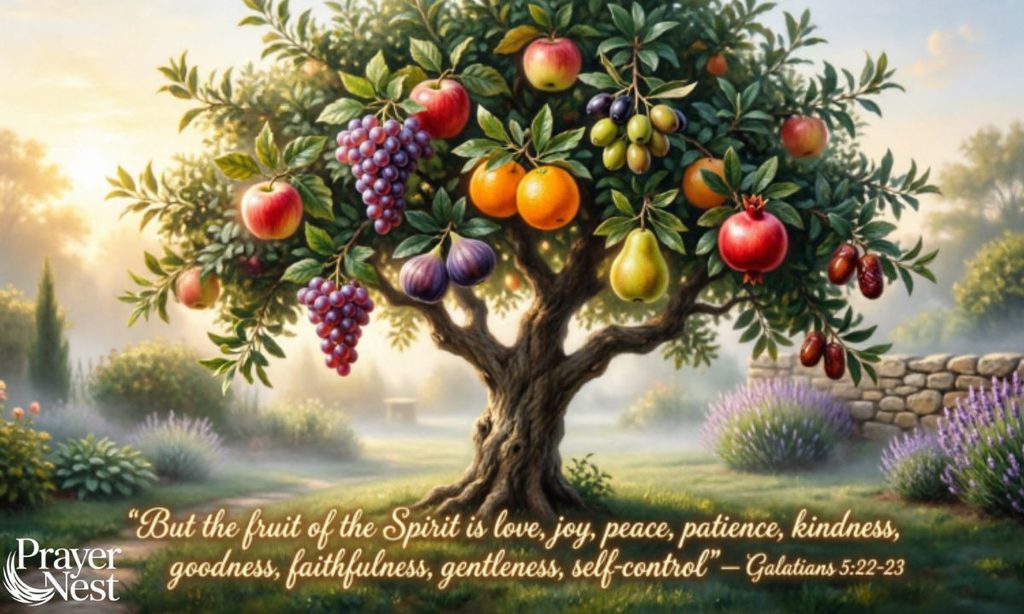
Galatians 5:22-23 lists self-control last among the fruits of the Spirit — alongside love, joy, peace, patience, kindness, goodness, faithfulness, and gentleness. Being listed last doesn’t make it least important; if anything, it’s often the fruit that holds the others together.
- This fruit grows naturally as a believer walks closely with God, not through sheer determination in isolation.
- It can’t be forced into existence overnight — like any fruit, it takes time, root, and consistent growth.
- Its presence in a person’s life is treated as real evidence that the Spirit is actively at work in them.
- 2 Peter 1:5-7 places self-control right after knowledge in a growth sequence, showing that knowing what’s right must be followed by the discipline to actually live it.
Core Bible Verses About Self-Control
These verses form the backbone of most biblical teaching on self-control, appearing across almost every list of key Scriptures on the topic.
| Verse | Core Teaching |
| Proverbs 25:28 | A person without self-control is like a city with broken-down walls |
| Galatians 5:22-23 | Self-control is listed as a fruit of the Spirit |
| 1 Corinthians 10:13 | God always provides a way of escape from temptation |
| 2 Timothy 1:7 | God gives a spirit of power, love, and self-discipline, not fear |
| 2 Peter 1:5-7 | Self-control is part of a step-by-step spiritual growth sequence |
| Proverbs 16:32 | Ruling your own spirit is better than conquering a city |
| Titus 2:11-14 | God’s grace trains believers to live self-controlled, godly lives |
| 1 Corinthians 9:24-27 | Self-control is compared to an athlete’s strict training |
| Philippians 4:13 | Strength for discipline comes through Christ |
| James 1:19-20 | Being quick to listen, slow to speak, and slow to anger |
Bible Verses About Self-Control in Speech and Anger
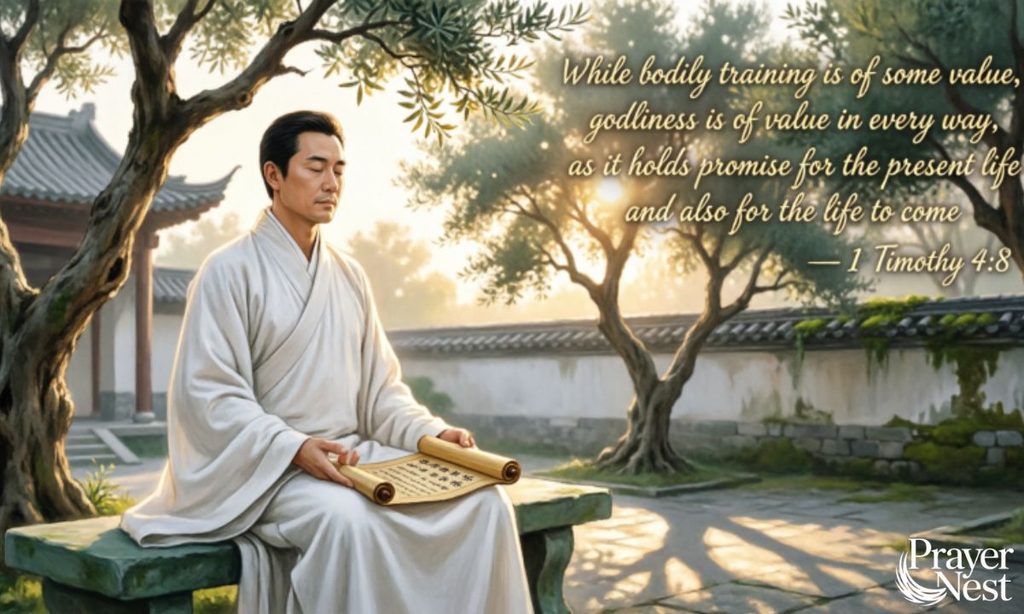
Some of the most repeated warnings about self-control in Scripture are about the tongue and the temper — two areas where restraint is tested the most often.
- Proverbs 18:21 — The tongue holds the power of life and death, so words are never treated as neutral.
- James 1:19-20 — Believers are told to be quick to listen, slow to speak, and slow to anger, since human anger doesn’t produce God’s righteousness.
- Proverbs 29:11 — A fool vents every emotion fully, while the wise quietly hold it back.
- Ephesians 4:26 — Anger itself isn’t automatically sin, but it comes with a boundary: don’t let the sun go down while you’re still angry.
- Psalm 141:3-4 — A prayer asking God to set a guard over the mouth and keep watch at the door of the lips.
- James 3:2-6 — The tongue is compared to a small spark capable of setting an entire forest on fire.
- Proverbs 13:3 — Whoever guards their mouth preserves their life, while loose lips lead to ruin.
Jesus Himself modeled this restraint at His own trial, remaining silent before His accusers rather than defending Himself (Matthew 26:62-63; 27:12-14) — restraint under provocation, not just calm speech on an easy day.
Bible Verses About Self-Control Over Thoughts and Desires
Biblical self-control begins in the mind, long before it ever shows up in behavior.
- Romans 12:1-2 — Believers are urged not to conform to worldly patterns but to be transformed through a renewed mind.
- Philippians 4:8 — A clear filter for thought life: whatever is true, honorable, right, pure, lovely, and admirable.
- Galatians 5:16-17 — An ongoing internal conflict between flesh and Spirit, with walking by the Spirit as the way to avoid gratifying fleshly desires.
- 1 John 2:16 — Sin is categorized into the lust of the flesh, the lust of the eyes, and pride in possessions and achievements.
- 2 Corinthians 10:5 — Every thought is to be taken captive and made obedient to Christ before it takes root.
Why the Mind Matters More Than the Moment
Self-control that only shows up in the moment of temptation tends to be fragile, because by then the thought has often already taken hold. Scripture consistently points earlier — to what a person allows into their mind well before the moment of decision arrives. This is why Philippians 4:8 doesn’t just say “avoid bad thoughts” — it gives something to actively fill the mind with instead.
Bible Verses About Self-Control in Temptation and Purity
Sexual purity is one of the areas Scripture addresses most directly when it comes to self-control, both in single life and marriage.
- 1 Corinthians 6:12-20 — The body is described as a temple of the Holy Spirit, deserving honor rather than being used however a person wishes.
- 1 Corinthians 7:5 — Married couples are cautioned about depriving each other, since prolonged deprivation can open the door to temptation.
- Job 31:1 — Job describes making a covenant with his own eyes not to look with lustful intent.
- 1 Thessalonians 4:3-4 — Believers are called to know how to control their own bodies in holiness and honor.
- 2 Timothy 2:22 — A direct instruction to flee youthful lusts and pursue righteousness, faith, love, and peace instead.
Learning From Joseph’s Example
Genesis 39 records Joseph being repeatedly pressured by Potiphar’s wife, yet refusing every time. When pressured directly, Joseph didn’t stay to reason it out — he physically fled the situation. His example shows that self-control sometimes means removing yourself entirely from temptation rather than trusting willpower to win a prolonged standoff.
Bible Verses About Self-Control and Food
Food is one of the most common — and most overlooked — arenas where self-control is tested daily, since it’s a temptation nearly everyone faces multiple times a day.
- Proverbs 23:20-21 — A warning against joining gluttons and drunkards, since that path leads toward poverty and ruin.
- Proverbs 25:16 — Even something good, like honey, becomes harmful in excess: don’t eat too much or it will make you sick.
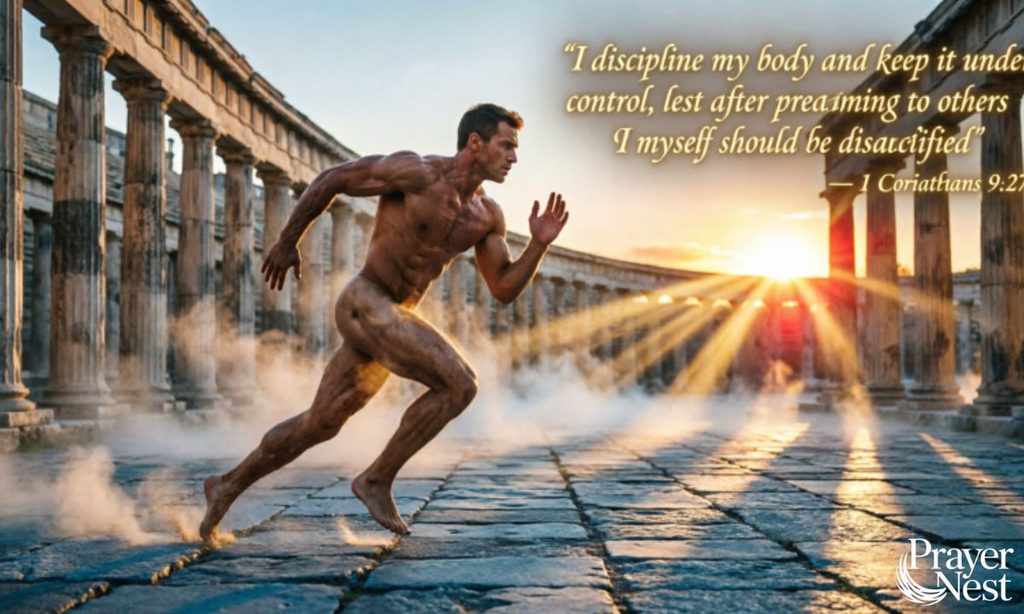
- 1 Corinthians 9:24-27 — Paul compares self-discipline to an athlete’s strict training, disciplining the body so as not to be disqualified.
- 1 Corinthians 6:19-20 — The body belongs to God, not to the individual, which reframes eating choices as an act of worship rather than pure preference.
- 1 Corinthians 6:12 — Not everything permissible is beneficial, and believers are called not to be mastered by anything, including food.
Struggles with food and self-control often carry more shame than other areas, partly because eating happens multiple times a day and slip-ups feel constant. Scripture’s response isn’t stricter rules — it’s grace paired with practical wisdom, since Titus 2:11-12 frames self-control as something grace itself teaches, not something willpower forces into existence.
Bible Verses About Self-Control During Trials
Difficult seasons test self-control more intensely than ordinary days, which is why Scripture gives specific guidance for staying disciplined under pressure.
- 1 Peter 5:8 — A call to be alert and sober-minded, since the enemy prowls like a roaring lion looking for someone to devour.
- Ephesians 6:12 — The real struggle isn’t against flesh and blood but against spiritual forces, reframing many personal battles as spiritual ones.
- Hebrews 12:1 — Believers are called to throw off every hindrance and run with perseverance, like a long-distance race rather than a sprint.
- Philippians 4:13 — Strength for endurance and self-control is found through Christ, not personal willpower alone.
- 2 Timothy 3:1-5 — A sobering description of the last days lists people “without self-control” among a list of troubling character traits.
Biblical Examples of Self-Control
Scripture doesn’t just teach self-control abstractly — it shows it lived out through specific people facing real pressure.
- Joseph repeatedly refused advances from Potiphar’s wife, choosing integrity even when no one else would have known if he’d given in.
- Daniel resolved not to defile himself with the king’s food and wine while in captivity, maintaining conviction even under pressure.
- David had multiple chances to kill Saul, who was actively hunting him, yet consistently refrained out of respect for God’s authority over Saul’s position.
- Jesus faced direct temptation in the wilderness and responded with Scripture instead of impulse, remained silent before His accusers, and showed restraint even during His own crucifixion.
Self-Control and Shame: What to Do When You Fail
Struggling with self-control often comes with a heavy layer of shame, especially when the same failure repeats itself. Scripture speaks directly to this discouragement, not just to the behavior itself.
- Failure in this area doesn’t disqualify anyone from God’s love or grace — confession and repentance are consistently presented as the path back, not shame.
- Every setback can become a lesson instead of a final verdict on someone’s character, especially when it’s reflected on honestly rather than buried.
- Giving up after failure often causes more long-term harm than the failure itself; Scripture consistently encourages perseverance even after stumbling multiple times.
- Growth in self-control is rarely a straight line — setbacks are part of the ordinary process, not evidence that the process has failed.
- Self-control ultimately isn’t achieved through willpower alone; it comes through ongoing relationship and surrender to God’s power at work internally.
If shame has been the loudest voice after a lapse, it helps to remember that conviction and shame are different: conviction says a specific action was wrong and can change, while shame says the person themselves is the problem. Only one of those reflects how Scripture treats failure.
How to Memorize and Apply These Verses
Verses about self-control tend to be most useful in the exact moment they’re needed — which means they need to already be memorized before that moment arrives, not looked up afterward.
- Match specific verses to specific weak areas: James 1:19-20 and Proverbs 29:11 for the tongue, Proverbs 14:29 and Proverbs 16:32 for temper, and 1 Corinthians 9:24-27 and 1 Corinthians 10:13 for appetite or habitual struggles.
- The promise in 1 Corinthians 10:13 — that God always provides a way of escape — is often considered the single most useful verse to know by heart, since the moment it’s needed is rarely a moment for looking anything up.
- Reviewing verses daily, even briefly, is itself a small act of self-control: a kept promise to yourself, repeated until consistency starts to feel normal.
- Writing verses on cards and placing them somewhere visible — a mirror, a wallet, a kitchen cabinet — keeps them available exactly where temptation tends to strike.
Practical Steps to Grow in Self-Control
Scripture pairs self-control with specific practices, not just willpower in isolation. These six habits are consistently connected to growth in this area.
- Commit to prayer. Self-control apart from prayer tends to run on willpower alone, which eventually runs out; prayer shifts the reliance toward God’s power instead.
- Read Scripture daily. Regular exposure to God’s Word renews the mind and reinforces the thought patterns self-control depends on.
- Pursue accountability. James 5:16 calls believers to confess to one another, not only to God, since sharing a struggle with a trusted person reduces isolation and increases honesty.
- Avoid known temptations. Removing unnecessary exposure to specific triggers is treated as wisdom, not weakness — the same wisdom Joseph displayed by physically fleeing temptation.
- Consider fasting. Fasting has long been used to express dependence on God, deepen prayer, and practice saying no to a craving in a controlled, intentional way.
- Remember the eternal goal. Self-control is framed as bigger than any single individual struggle — it’s part of becoming more like Christ and bringing His kingdom into ordinary, daily choices.
Self-Control for Children and Families
Self-control isn’t just an adult struggle — Scripture treats it as something worth teaching intentionally, starting early in a child’s life.
- Training children in wisdom and discipline from a young age is treated as an investment in their future character, not just present behavior.
- Simple, visual verses — like the picture of broken city walls in Proverbs 25:28 — are especially memorable starting points for younger learners.
- Children tend to learn self-control more through observation than instruction; parents modeling patience and calm responses teach more than words alone.
- Biblical discipline is never separated from love — correction paired with genuine care helps children understand the purpose behind boundaries, rather than just the rule itself.
- A home environment of consistency between what’s taught and what’s modeled builds both trust and lasting self-control in children over time.
Which Verse to Use for Your Specific Struggle
Use this table to quickly find a starting verse for the specific area you’re working on.
| Your Struggle | Verse to Start With |
| Losing your temper quickly | Proverbs 16:32 or James 1:19-20 |
| Saying things you regret | Proverbs 18:21 or Psalm 141:3-4 |
| Overeating or food struggles | Proverbs 25:16 or 1 Corinthians 6:19-20 |
| Sexual temptation or lust | Job 31:1 or 2 Timothy 2:22 |
| Facing a recurring temptation | 1 Corinthians 10:13 |
| Feeling fearful or anxious about discipline | 2 Timothy 1:7 |
| Discouraged after repeated failure | Romans 8:1 or 1 John 1:9 |
| Struggling to build any lasting habit | 2 Peter 1:5-7 or 1 Corinthians 9:24-27 |
| Enduring a hard season or trial | 1 Peter 5:8 or Hebrews 12:1 |
| Wanting a verse to teach a child | Proverbs 25:28 or Galatians 5:22-23 |
Vital Truths to Remember Daily
Growing in self-control needs steady reminders, especially on the days it feels hardest to practice.
- This fruit grows, it isn’t forced. Self-control develops through relationship with God over time, not through a single burst of willpower.
- Failure isn’t final. Every lapse can be a lesson rather than proof that change is impossible.
- A way out is always promised. No temptation arrives without an escape route, even when it’s hard to see in the moment.
- The mind matters before the moment does. What’s allowed into the mind daily shapes what happens in the moment of decision.
- Community makes this easier. Self-control grows stronger with honest accountability, not in complete isolation.
Frequently Asked Questions
What does the Bible say about self-control?
The Bible teaches that self-control is a fruit of the Spirit and a vital part of Christian living, helping believers resist temptation and make choices that honor God rather than being ruled by impulse.
Why is self-control important according to Scripture?
It protects a believer’s witness, strengthens relationships, and keeps decisions rooted in truth rather than momentary emotion or temptation.
Is self-control considered a fruit of the Spirit?
Yes, self-control is explicitly listed among the fruits of the Spirit in Galatians 5:22-23, alongside love, joy, peace, patience, kindness, goodness, and faithfulness.
What Bible verse is most commonly associated with self-control?
Galatians 5:22-23 and Proverbs 25:28 are two of the most frequently quoted, though 2 Timothy 1:7 is also widely referenced for its connection between self-control and freedom from fear.
Can prayer actually help improve self-control?
Yes. Prayer shifts reliance away from personal willpower and toward God’s ongoing strength, which Scripture treats as a more sustainable source of discipline than effort alone.
Does the Bible connect self-control to food and eating?
Yes. Verses like Proverbs 23:20-21, Proverbs 25:16, and 1 Corinthians 9:24-27 speak directly to moderation, gluttony, and disciplined eating as part of honoring God with the body.
What should someone do after repeatedly failing at self-control?
Scripture consistently points toward honest confession and renewed effort rather than giving up — failure is treated as part of the growth process, not the end of it.
How can Bible verses help someone control anger specifically?
Verses like James 1:19-20, Proverbs 29:11, and Ephesians 4:26 give both a warning against unrestrained anger and a practical boundary for how quickly it should be resolved.
Is self-control something a person can build through habit and practice?
Yes. While Scripture treats it as a fruit of the Spirit, it also encourages practical steps — prayer, Scripture reading, accountability, and avoiding known triggers — that support its growth over time.
What is the difference between self-control and simple willpower?
Willpower relies entirely on personal effort and tends to run out under enough pressure, while biblical self-control is described as a fruit produced through an ongoing relationship with God, which is renewed rather than depleted.
Conclusion
Self-control runs through nearly every part of Scripture — the tongue, the temper, the appetite, the eyes, and the daily habits that quietly shape a life. It’s treated not as an isolated personality trait some people are simply born with, but as fruit that grows through a real relationship with God, supported by honest practices like prayer, Scripture, and accountability.
If this is an area you’re actively working on, take heart in this: failure along the way is part of the process, not proof that it isn’t working. Scripture consistently points forward — toward grace after a stumble, a way of escape in the next temptation, and a steady kind of strength that grows stronger the more it’s leaned on.

“Denzel is a faith-driven writer with 4 years of experience in Bible study and sharing blessings. At PrayerNests.com, he creates inspiring prayer content to uplift believers and encourage a deeper connection with God’s Word.”
1 thought on “41+ Bible Verses About Self-Control: Scripture, Wisdom & Spiritual Discipline ”