

The Bible speaks clearly about the seriousness of adultery, unfaithfulness, and betrayal within marriage. Bible verses about adultery and cheating teach the importance of faithfulness, honesty, purity, and keeping the promises made to a spouse. Scripture presents marriage as a relationship that should be treated with honor and protected from actions that cause deep emotional and spiritual harm.
At the same time, the Bible also speaks about repentance, forgiveness, wisdom, and restoration. Adultery can cause painful consequences, but Scripture does not encourage people to hide wrongdoing or ignore the damage it creates. Instead, biblical teaching calls people to be truthful, turn away from sin, seek forgiveness, and make choices that honor God and respect others.
What Does the Bible Say About Adultery?
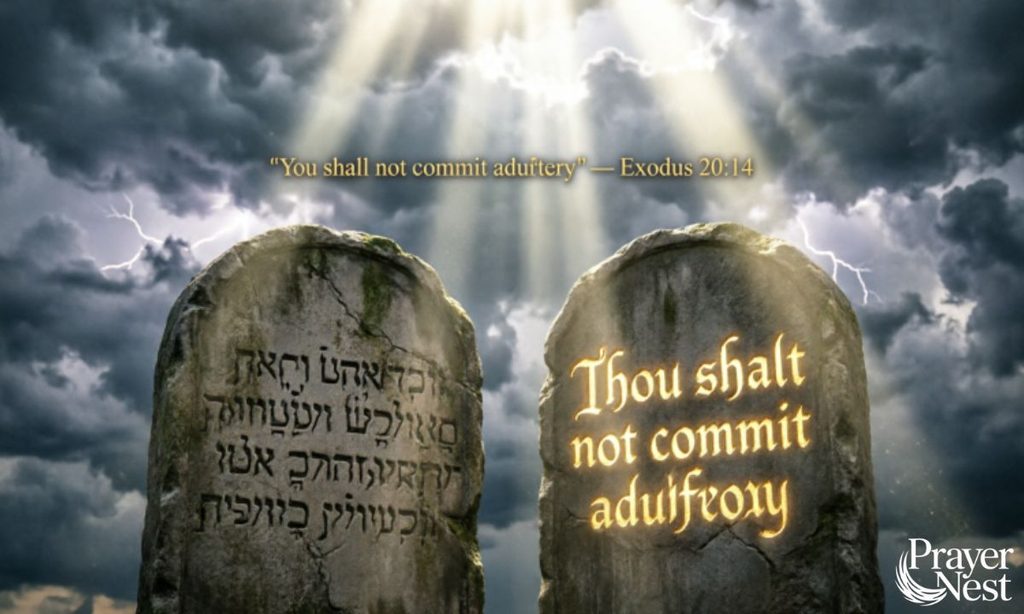
Scripture doesn’t soften its language around adultery, but it also doesn’t stop at condemnation — it consistently pairs the warning with a path toward mercy for anyone who genuinely repents.
- Exodus 20:14 places “You shall not commit adultery” directly among the Ten Commandments, alongside prohibitions on murder and theft.
- Jesus significantly expanded the definition in Matthew 5:27-28, teaching that looking at someone with lustful intent is already adultery in the heart, long before any physical act occurs.
- Malachi 2:14 describes God Himself as a witness to the marriage covenant, meaning unfaithfulness isn’t a private matter between two people — it’s treachery against a promise made before Him.
- Modern forms of cheating — emotional affairs, secret texting, pornography, and romantic online relationships — fall under this same biblical standard, since the common thread in all of them is deception.
- Scripture treats adultery as a serious violation precisely because it takes something sacred, entrusted to a covenant, and gives it away in secret.
Core Bible Verses About Adultery
These verses form the backbone of nearly every biblical discussion on adultery and unfaithfulness.
- Exodus 20:14 — “You shall not commit adultery,” one of the Ten Commandments.
- Matthew 5:27-28 — Jesus teaches that lustful looking is already adultery in the heart.
- Hebrews 13:4 — Marriage should be honored, the marriage bed kept pure, and God will judge the sexually immoral.
- Proverbs 6:32 — Whoever commits adultery lacks sense and destroys himself in the process.
- 1 Corinthians 6:18 — Believers are told to flee sexual immorality, since it uniquely sins against one’s own body.
- 1 Thessalonians 4:3-5 — It is God’s will that believers avoid sexual immorality and control their own bodies in holiness and honor.
- Galatians 5:19-21 — Adultery and sexual immorality are listed among the works of the flesh, opposed to a Spirit-led life.
- Malachi 2:14-15 — God calls Himself a witness to the marriage covenant and warns against dealing treacherously with a spouse.
The Progression From Desire to Sin
One of the most practically important teachings in Scripture on this topic isn’t a single verse — it’s a pattern. James 1:14-15 maps out exactly how temptation moves from a private thought into a devastating action.
- Desire itself isn’t sin — it’s the starting point of a process that can go in either direction.
- A person is “dragged away and enticed” when a desire is entertained rather than dismissed.
- Once desire is nurtured — through fantasy, repeated contact, or emotional investment — it “conceives” and gives birth to sin.
- Sin, left to grow, eventually produces death: the death of trust, of intimacy, and often of the marriage itself.
Why the Affair Never Starts Where People Think
Adultery rarely begins in the moment most people imagine. It begins earlier — in a thought entertained rather than dismissed, a boundary quietly relaxed, or a conversation allowed to become more intimate than it should have been. David’s affair with Bathsheba (2 Samuel 11:2-4) follows this exact pattern: he saw, he inquired despite already knowing she was married, he sent for her, and only then did the physical act occur. Each step made the next one feel more inevitable. Understanding this progression is what makes Proverbs 4:23’s instruction to guard the heart above all else so practical — the guard that matters most is set long before the moment of decision arrives.
Bible Verses About the Consequences of Adultery

Scripture describes the consequences of adultery not to shame people but to warn them honestly about damage that’s often invisible until it’s already done.
- Proverbs 6:27-29 — Compares adultery to carrying fire against your chest: you cannot touch it and remain unburned.
- Proverbs 6:32-33 — Adultery brings wounds, dishonor, and a disgrace that doesn’t easily wash away.
- Proverbs 5:3-5 — A warning that what feels sweet in the moment turns bitter in the end, like honey that becomes poison.
- Galatians 6:7 — “God is not mocked” — whatever a person sows, that they will also reap.
- Numbers 32:23 — A sober reminder that hidden sin doesn’t stay hidden forever.
- Matthew 15:19 — Adultery is described as flowing out of the heart, alongside other evils, showing that the real issue is internal before it’s ever behavioral.
These consequences aren’t limited to the person who strays. Children in homes affected by adultery often carry the emotional weight for years, and trust — once broken — is rarely rebuilt quickly, no matter how sincere the apology.
Bible Verses About Guarding Your Heart Against Temptation
Prevention, according to Scripture, isn’t about willpower in the moment of temptation — it’s about decisions made well before that moment arrives.
- Job 31:1 — Job describes making a covenant with his own eyes not to look with desire, a proactive commitment rather than a reactive one.
- Proverbs 4:14-15 — Practical wisdom to avoid the path of temptation entirely rather than testing how close you can get.
- Proverbs 5:15 — “Drink water from your own cistern” — an image for finding satisfaction within your own marriage rather than looking elsewhere.
- Romans 12:2 — Transformation happens through the renewing of the mind, which shapes how temptation is recognized and resisted.
- Romans 13:13-14 — Believers are told to “make no provision for the flesh,” meaning don’t set yourself up for failure through avoidable situations.
- Psalm 119:11 — “I have hidden your word in my heart that I might not sin against you,” showing Scripture memorization as a direct guard against temptation.
- Proverbs 5:18-19 — A reminder to actively delight in one’s own spouse, since ongoing investment in a marriage is itself a safeguard against looking elsewhere.
Biblical Stories About Adultery and Its Aftermath
Scripture doesn’t just teach about adultery in the abstract — it tells honest, unflinching stories about it.
- David and Bathsheba (2 Samuel 11-12) — David, described as a man after God’s own heart, still fell catastrophically when an unchecked look turned into pursuit, deception, and eventually murder. His genuine repentance is recorded in Psalm 51, and though forgiven, the consequences of his sin were severe and lasting.
- Joseph and Potiphar’s Wife (Genesis 39) — Repeatedly pressured despite every circumstance that could have made giving in feel justified, Joseph refused and ultimately fled rather than negotiating with temptation. His integrity cost him short-term freedom but was honored by God over time.
- Jesus and the Woman Caught in Adultery (John 8:1-11) — Religious leaders demanded she be stoned according to the Law; Jesus exposed their own hypocrisy and, once her accusers left, told her plainly that He did not condemn her — while also calling her to leave her sin behind.
Each of these stories carries a different lesson: no one is immune to temptation, fleeing is sometimes the only real defense, and grace never means minimizing what happened.
Does the Bible Allow Divorce After Cheating?
This is one of the most commonly asked questions on this topic, and Scripture does address it directly, though Christians hold differing views on exactly how to apply it.
- Matthew 19:9 records Jesus naming sexual immorality as legitimate grounds for divorce, when He says that divorcing a spouse for any other reason and remarrying constitutes adultery.
- This means Scripture permits divorce after infidelity — it does not require it. Reconciliation and restoration remain possible and are affirmed elsewhere in Scripture as a good and honorable path when both people are willing.
- Many Christian traditions also point to 1 Corinthians 7:15, regarding abandonment by an unbelieving spouse, as a second potential ground some counselors apply more broadly to persistent, unrepentant unfaithfulness.
- Christians disagree on how strictly to interpret these exceptions — some hold that divorce is permitted only in narrowly defined circumstances, while others apply the principle more broadly to situations involving ongoing, unrepentant betrayal.
- Because this decision carries lasting consequences, most pastors and counselors strongly recommend walking through it with wise, trusted guidance rather than deciding alone in a moment of pain or anger.
Bible Verses for the Betrayed Spouse
If you’re the one who’s been betrayed, Scripture doesn’t rush past your pain to get to a lesson — it sits with it directly.
- Psalm 34:18 — “The Lord is close to the brokenhearted and saves those who are crushed in spirit.”
- Psalm 147:3 — God heals the brokenhearted and binds up their wounds.
- Psalm 46:1 — “God is our refuge and strength, a very present help in trouble.”
- Proverbs 6:34-35 — Validates the depth of a betrayed spouse’s anger, describing it as a fury that gifts and gestures alone cannot quickly appease.
- Joel 2:25 — “I will restore to you the years that the swarming locust has eaten” — a promise that even devastated seasons can be redeemed.
If you’re in this position, know that your pain is not an overreaction, and Scripture never asks you to minimize it in order to be considered faithful or forgiving.
How to Rebuild Trust After Infidelity

Rebuilding trust after adultery is one of the hardest processes two people can walk through together, and Scripture provides both the honesty and the framework for doing it well.
- Trust is rebuilt through consistent action over time, never through a single conversation, apology, or promise.
- The partner who was unfaithful needs to offer genuine transparency — with communication, time, and honesty — for as long as it takes to rebuild confidence.
- The betrayed partner needs real space to grieve fully, including the loss of the safety and trust they believed they had.
- Forgiveness and trust are not the same thing: forgiveness can be extended immediately as a decision, while trust is rebuilt gradually and cannot be demanded or rushed.
- Professional Christian counseling is often essential, providing structure and an outside perspective that friends and family usually can’t offer.
- Small, consistent, ordinary acts of faithfulness rebuild trust more effectively than occasional grand gestures.
Healing is genuinely possible, but it’s rarely linear — expect setbacks, hard conversations, and seasons of doubt as a normal part of the process rather than signs that it isn’t working.
Bible Verses About Repentance and Forgiveness After Adultery
For those who have been unfaithful and are seeking a way back, Scripture is honest about the weight of what happened while still holding the door to forgiveness wide open.
- 1 John 1:9 — “If we confess our sins, he is faithful and just to forgive us our sins and to cleanse us from all unrighteousness.”
- Psalm 51:1-4 — David’s own prayer of repentance after his affair was exposed, taking full responsibility without minimizing or deflecting.
- 2 Corinthians 7:10 — Distinguishes godly sorrow, which produces genuine repentance, from worldly sorrow, which only regrets getting caught.
- Proverbs 28:13 — Concealing sin blocks a person from prospering, while confessing and forsaking it opens the door to mercy.
- Colossians 3:13 — Believers are called to forgive as the Lord forgave them, completely and without holding it over the other person permanently.
Genuine repentance is shown through changed behavior sustained over time, not just words spoken in a single emotional moment. Confession is the beginning of restoration, not the whole of it.
Practical Steps to Protect Your Marriage
Scripture pairs its warnings with genuinely practical guidance for protecting a marriage before temptation ever becomes a crisis.
- Be honest about your own vulnerabilities. Recognize the specific relationships, environments, or emotional states that have historically created risk for you.
- Avoid unnecessary proximity to temptation. This includes limiting alone time with someone you’re attracted to and being transparent about technology use.
- Invest actively in your marriage. Regular time, meaningful conversation, and physical affection keep a relationship emotionally nourished rather than left to drift.
- Set clear, specific boundaries. Vague commitments like “I’ll be careful” rarely hold up under real temptation; specific boundaries do.
- Address attraction to someone else immediately. Confession, prayer, and accountability with a trusted person can interrupt a pattern before it develops further.
- Build real accountability. Proverbs 27:17’s picture of iron sharpening iron reflects the mutual strengthening genuine accountability provides.
- Seek wise counsel early. Proverbs 15:22 teaches that plans succeed with many advisers — this applies directly to protecting a marriage before a crisis, not just responding after one.
Which Verse to Turn To, Depending on Your Situation
Use this table to quickly find a starting point for where you are right now.
| Your Situation | Verse to Start With |
| You’re facing temptation right now | 1 Corinthians 10:13 or Job 31:1 |
| You’ve already been unfaithful and want to repent | Psalm 51:1-4 or 1 John 1:9 |
| You’ve just discovered your spouse’s infidelity | Psalm 34:18 or Psalm 147:3 |
| You’re deciding whether to pursue divorce | Matthew 19:9 |
| You’re trying to rebuild trust together | Colossians 3:13 or Proverbs 3:3-4 |
| You want to guard your marriage proactively | Proverbs 5:15-19 or Romans 13:13-14 |
| You’re struggling with bitterness after betrayal | Hebrews 12:15 or Ephesians 4:31-32 |
| You need encouragement that restoration is possible | Joel 2:25 or Romans 8:28 |
Key Bible Verses at a Glance
| Verse | Core Teaching |
| Exodus 20:14 | The direct commandment against adultery |
| Matthew 5:27-28 | Lustful looking is adultery in the heart |
| Hebrews 13:4 | Marriage is honored; God judges the unfaithful |
| Proverbs 6:32-33 | Adultery brings self-destruction and lasting disgrace |
| 1 Corinthians 6:18 | A call to flee, not negotiate with, sexual immorality |
| Malachi 2:14 | God as witness to the marriage covenant |
| James 1:14-15 | The progression from desire to sin to death |
| Psalm 51:10 | A prayer for a clean heart after failure |
| 1 John 1:9 | The promise of forgiveness upon honest confession |
| Psalm 34:18 | God’s nearness to the brokenhearted |
Vital Truths to Remember

Whether you’re protecting your marriage, healing from betrayal, or finding your way back after failure, a few truths are worth returning to often.
- No one is immune. David’s story is proof that even the most spiritually mature people are not beyond temptation — vigilance matters at every stage of life.
- The guard happens early. Adultery rarely starts where people think it does; the real protection happens in the small decisions made long before a crisis moment.
- Forgiveness and trust are different processes. One can be given as a decision; the other must be rebuilt slowly, and both are legitimate needs.
- Pain deserves to be taken seriously. Scripture never asks a betrayed spouse to minimize their hurt in order to be considered faithful or forgiving.
- No failure is beyond God’s mercy. David’s restoration after adultery and its devastating aftermath remains one of Scripture’s clearest pictures of genuine, costly grace.
Frequently Asked Questions
What does the Bible say about adultery and cheating?
The Bible strongly teaches that adultery is sin, defining it as sexual unfaithfulness to a spouse and extending the definition to lustful thoughts, while also offering forgiveness to those who sincerely repent.
Why does the Bible warn so strongly against adultery?
Because it damages trust, families, and a person’s spiritual integrity — the Ten Commandments place it alongside murder and theft to reflect how seriously God views it.
What is one of the most famous Bible verses about adultery?
Exodus 20:14, “You shall not commit adultery,” is one of the most widely known, along with Jesus’s teaching in Matthew 5:28 that lustful looking is already adultery in the heart.
Does the Bible allow divorce after infidelity?
Matthew 19:9 names sexual immorality as legitimate grounds for divorce, though it permits rather than requires it, and Christians differ on how broadly to apply this exception.
Is forgiveness possible after adultery, according to the Bible?
Yes. Scripture consistently teaches that sincere repentance is met with God’s forgiveness, and David’s restoration after his affair with Bathsheba is one of the Bible’s clearest examples.
How does the Bible describe the consequences of cheating?
It describes emotional devastation, broken trust, spiritual separation from God, and lasting relational damage, often extending beyond the couple to children and extended family.
What does the Bible say to someone who has been cheated on?
It offers direct comfort — that God is close to the brokenhearted (Psalm 34:18), heals wounds (Psalm 147:3), and is a refuge in trouble (Psalm 46:1) — without minimizing the pain of betrayal.
How can a marriage guard against adultery before it happens?
Through honest boundaries, active investment in the relationship, avoiding unnecessary proximity to temptation, and guarding the heart and mind through Scripture and prayer.
Can a marriage be restored after adultery?
Yes, restoration is possible when both partners are genuinely committed to honesty, accountability, and time, though the process is rarely quick or free of setbacks.
What is the main message of the Bible’s teaching on adultery?
That faithfulness matters deeply to God, temptation should be taken seriously long before it becomes a crisis, and no failure — including adultery — is beyond the reach of genuine repentance and grace.
Conclusion
Adultery is one of the most serious topics Scripture addresses, and it never treats the subject lightly — not the temptation, not the consequences, and not the pain it leaves behind. But alongside every warning sits an equally serious promise: that confession is met with forgiveness, that brokenhearted people are met with God’s nearness, and that even the most devastating failures have not been placed beyond His reach.
Whether you’re guarding your marriage, healing from betrayal, or finding your way back after having caused it, the same invitation applies — bring it honestly into the light, seek wise counsel rather than walking through it alone, and trust that restoration, while rarely fast or simple, remains genuinely possible.

“Denzel is a faith-driven writer with 4 years of experience in Bible study and sharing blessings. At PrayerNests.com, he creates inspiring prayer content to uplift believers and encourage a deeper connection with God’s Word.”